
✍️ CRR Cash Reserve Ratio is the minimum fraction of total deposits of a bank’s customers that banks have to hold as reserves with the central bank. ✍️ SLR Statutory Liquidity Ratio is the ratio of liquid assets to the net demand and time liabilities. ✍️ LAF Liquid Adjustment Facility is a tool to allow banks to borrow money through repurchase agreements. It consists of repo and reverse repo operations. ✍️ MSF Marginal Standing Facility allows scheduled banks to borrow funds overnight from RBI against approved government securities. ✍️ MSS Market Stabilization Scheme is a monetary policy intervention by RBI to withdraw excess liquidity by selling government securities in the economy. ✍️ OMO Open Market Operations refers to the buying and selling of government securities in the open market so as to expand or contract the amount of money in the banking system. ✍️ REPO Repo...

Payments Banks
(a). What exactly is a Payment Bank?
Payment Bank is basically a new model of banks that has been conceptualized by RBI. Now, many of you may further ask, how it is different from a regular banks?
How is it different from a regular bank ?
Payment Banks operate on a smaller scale as compared to the commercial banks of the country.
Payment Banks do not have any credit risk involved with them as they cannot issue loans and credit cards.
Payment Banks can accept demand deposits up to Rs 1 lakh only.
Why were the Payment Banks required?
The primary aim of payments bank is to expand the availability of financial services to unbanked entities, for instance, small businesses, households with low income, migrant labour force etc. i.e. to achieve financial inclusion as well as to provide financial services to every citizen concentrating more to the rural India.
(b). History of Payment banks
Reserve Bank of India (RBI), on 23rd September 2013constituted a committee on Comprehensive Financial Services for Small Businesses and Low Income Households headed by Nachiket Mor. The committee submitted the report on 7th January 2014 and recommended the formation of a new category of bank (Payment Banks).
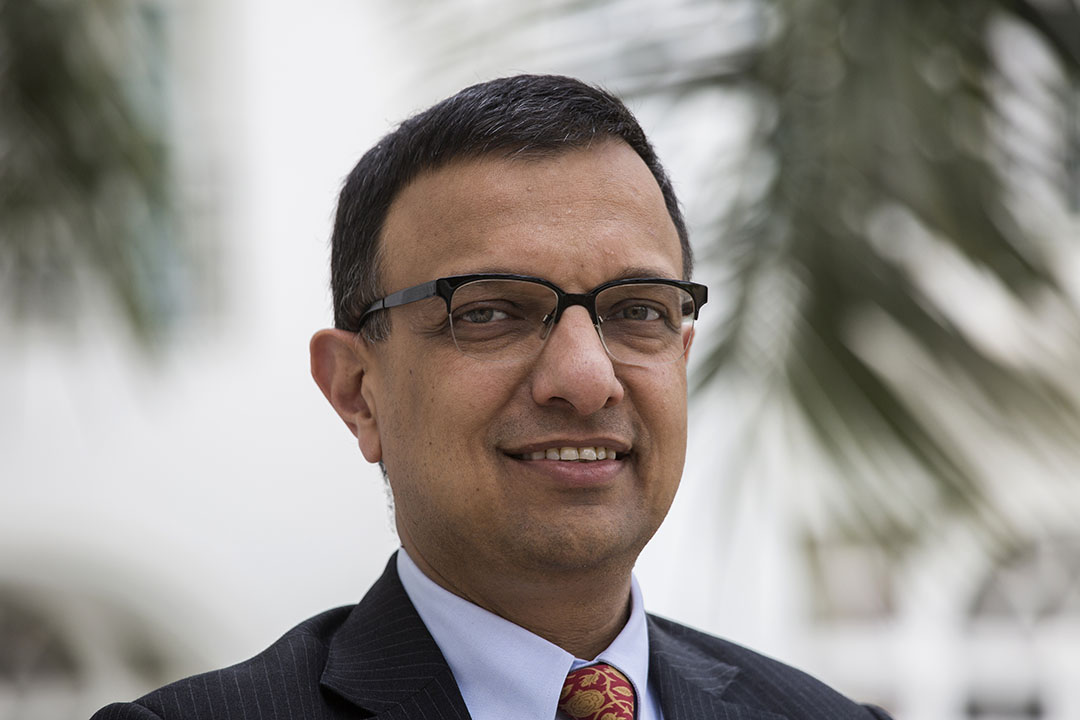
Nachiket Mor
The following points recommended by committee:
Draft guidelines were issued for payment banks, seeking the opinion of interested entities as well as general public on 17th July 2014. Final guidelines for Payment banks were released by RBI on 27th November 2014.
41 applicants applied for the licence of Payments Bank and their list was released by RBI in February 2015. The licence applications were evaluated by External advisory Committee (EAC), headed by Nachiket Mor, which submitted the report on 6th July 2015 after examining the financial track record as well as governance issues of the applicant entities.
On 19th august 2015, RBI gave in-principle licence to 11 entities to launch Payments Bank. The In-Principle licence is valid for a period of 18 months and the concerned entities are required to fulfill the requirements within this period. They cannot engage in the banking activities in this period. Upon satisfactory fulfillment of the conditions required to set up a Payments Bank. RBI will grant full licences under Section 22 of the Banking Regulation act, 1949.
Following 11 entities were initially granted the In-Principle licence by RBI
Airtel M-Commerce Services
Department of Posts
Aditya Birla Nuvo
FINO PayTech
Cholamandalam Distribution Services
National Securities Depository
Paytm
Tech Mahindra
Vodafone M-Pesa
Reliance Industries
Sun Pharmaceuticals (Dilip Shanghvi)
However, 3 out of these 11 organisations surrendered their licences, namely
(a) Cholamandalam Distribution Services
(b) Sun Pharmaceuticals (Dilip Shanghvi)
(c) Tech Mahindra
Conditions for Payments Banks
The minimum capital requirement to set up a Payments Bank is Rs. 100 crore.
The stake of the promoter for the initial 5 year period should be minimum 40%.
Foreign share holdings will be permitted subject to the rules of foreign direct investment for private banks in India.
The voting rights in the bank will be regulated by Banking Regulation Act, 1949 and the upper cap of voting right for any shareholder will be 10%. This may be raised to 26% by Reserve bank of India.
Any acquisition of more than 5% needs to be approved by RBI.
Majority of Bank’s board of Directors should consist of independent directors, who should be appointed as per RBI Guidelines.
Payments Bank can accept Utility Bills and they cannot form separate subsidiary to undertake non-banking activities.
25% of the branches of these banks should be in the unbanked rural areas.
Payment Banks cannot approve/ disburse loans or issue credit cards.
Payment banks can offer remittance services, mobile payments/transfers/purchases and other banking services like ATM/debit cards, net banking and third party fund transfers.
Payment Bank will be provided licence under Section 22 of the Banking Regulation act, 1949 and they will be registered as a Public Limited Company under Companies act, 2013.
As of now, 6 entities have already started their operations as Payments Bank. The list is as follows:
Airtel Payments Bank
Paytm Payments Bank
India Post Payments Bank
Fino Payment Bank
Aditya Birla Idea Payments Bank
Jio Payments Banks
Payments Banks in Details
(a). Airtel Payment bank Ltd
It is the first Payments banks in India.
Airtel Payment Bank Ltd is a joint venture between Bharti Airtel (80.1%) and Kotak Mahindra Bank (19.9%).
Airtel Payment bank Ltd launched its pilot project of its banking services 10,000 Airtel retail outlets in Rajasthan on 23rd November 2016.
Anubrata Biswas is the MD & CEO of Airtel Payments Bank.
Airtel Payments Bank is a fully digital and paperless bank.
It offers quick and paperless account opening using Aadhaar based e-KYC i.e no documents are required, only the customer’s Aadhaar number is sufficient.
It also offers personal accidental insurance of Rs. 1 Lac with every Savings Account.
(b). Paytm Payments Bank
Paytm received approval from RBI to start its Payment Bank in January 2017 and started its operation with first branch coming up in Noida, Uttar Pradesh.
Vijay Shekhar Sharma, founder of One97 Communications (parent company of Paytm) is MD & CEO.
(c). India Post Payment bank
India Post Payment Bank (IPPB) was incorporated as a Public Sector Bank under the Department of Posts with 100% Government of India equity.
First branch of IPPB inaugurated at Raipur and Ranchi on 30th January, 2017 .
IPPB will play a major role in financial inclusion as India Post has about 1,54,000 post offices, of them 90% are in rural areas.
IPPB will set up 650 branches across the country by September 2017.
Payments Banks will thus help expand the potential of financial inclusion in the economy.
MD & CEO - Suresh Sethi
(d). Fino Payments Bank
The first payments bank to go live with 410 branches and more than 25,000 banking points on day one.
The bank was incorporated on 4th April, 2017 with the name Fino Payments Bank Limited.
MD & CEO - Rishi Gupta
Headquarters - Mumbai
(e). Aditya Birla Idea Payments Bank
Aditya Birla Idea Payments Bank Ltd has commenced operations as a payments bank with effect from February 22, 2018.
MD & CEO - Sudhakar Ramasubramanian
Headquarters - Mumbai
(f). Jio Payments Bank
Jio Payments Bank is an Indian payment bank that started operating in 2018.
MD & CEO - H. Srikrishnan
Headquarters - Mumbai
------------------------------------------
Comments
Post a Comment